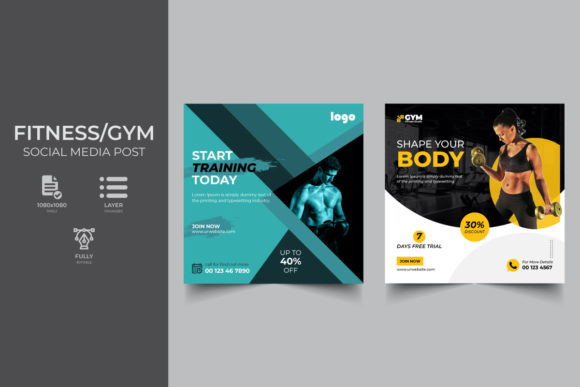
Mastering Your Brand Presence with a Professional Gym Fitness Template Design
In the fast-paced world of digital marketing, first impressions are often made before a potential client even steps foot in your facility. Whether you are a personal trainer building a personal brand, a gym owner managing a bustling community, or a social media manager handling multiple fitness accounts, the visual quality of your content dictates your perceived authority. This is where a high-quality Gym Fitness Template Design becomes an indispensable asset. It is not merely about having pretty pictures; it is about establishing a consistent, professional identity that resonates with your audience across platforms like Instagram, Facebook, and Pinterest.
Many entrepreneurs and creators rush into purchasing or downloading design assets without fully understanding what makes a template effective for their specific needs. The market is flooded with options claiming to be "clean and modern," yet not all deliver on the promise of usability and impact. By understanding the nuances of selecting and utilizing these tools, you can avoid common pitfalls that waste time, money, and creative energy.
Understanding the Value of Specialized Fitness Graphics
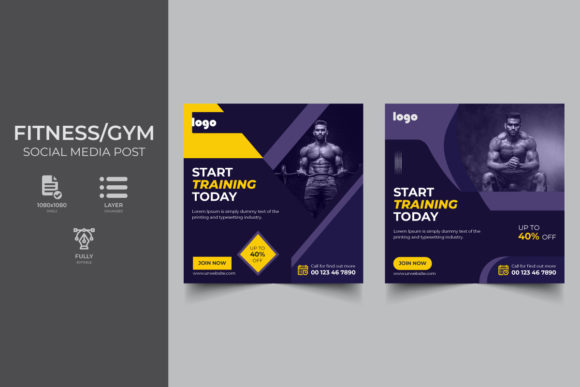
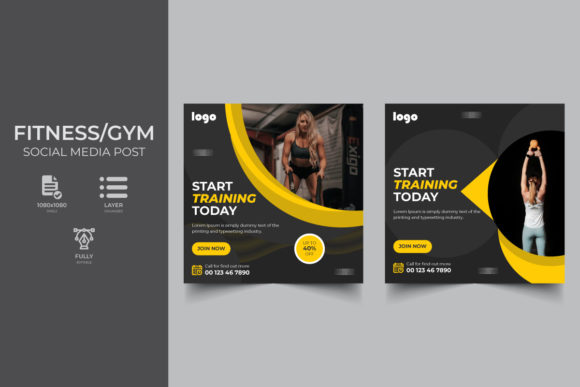
A dedicated Gym Fitness Template Design serves as a foundational framework for your social media strategy. Unlike generic business templates, fitness-specific designs incorporate visual cues that speak directly to health, energy, and movement. They often utilize dynamic layouts, bold typography, and color palettes that evoke motivation. When you use a template tailored to this niche, you eliminate the guesswork of design theory and allow yourself to focus on creating valuable content for your followers.
The primary advantage lies in consistency. Algorithms favor accounts that post regularly, but maintaining a cohesive aesthetic while posting daily can be exhausting. A well-structured template allows you to swap out text and images rapidly while keeping your brand recognition intact. However, the effectiveness of this workflow depends entirely on the quality of the file you choose. A poor choice here can lead to frustration and a disjointed brand image.
Common Mistakes When Selecting Design Assets
One of the most frequent errors creators make is overlooking the technical specifications of the file format. You might find a stunning preview image online, only to download a low-resolution JPEG that cannot be edited. For professional results, you must ensure you are acquiring a fully editable EPS file. This vector-based format ensures that your graphics remain crisp regardless of how they are scaled, and it allows you to modify every element of the design without losing quality. Relying on raster images (like PNGs or JPGs) for editable backgrounds often results in pixelation and limited customization options.
Another significant misunderstanding involves the organization of the source file. Beginners often assume that once they open a design program, they can easily click and change what they need. However, if the template lacks layer organization, the editing process becomes a nightmare. Imagine trying to change a headline only to realize it is merged with the background image or hidden behind dozens of ungrouped elements. A professional template should have clearly named layers, grouped logically, making it easy to isolate text, shapes, and image placeholders. Without this structure, efficiency plummets, and the temptation to abandon the template for a simpler, less professional solution grows.
Furthermore, many users fail to verify font compatibility. A template might look incredible in the preview because it uses a specific, stylish typeface. If the package does not include the font or provide a direct link to a free font alternative, you may find your design falling apart when opened on your machine. The software will substitute the missing font with a default system font, ruining the intended hierarchy and style. Always check the documentation to ensure the typography is accessible and licensed for your intended use, whether commercial or personal.
The Impact of Image Exclusions on Workflow
It is standard industry practice for template designers to state that the image is not included. While this is normal, it often catches inexperienced buyers off guard. They purchase the template expecting a turnkey solution with stock photography ready to go. When they realize they need to source their own high-quality imagery, they may resort to using low-resolution photos from their phone or unauthorized images from Google, which degrades the overall look of the post.
To avoid this, plan your content shoot in advance. Understand that the template provides the frame, but your photos provide the soul. Ensure your images match the aspect ratio of the template, typically 1080px by 1080px for square social posts. If your photos are vertical or horizontal, you will need to crop them carefully to fit the designated placeholders without cutting off essential details like a client's form or facial expression. Taking the time to curate or shoot images that complement the template's color scheme will elevate the final output significantly.
Practical Advice for Maximizing Template Utility
Before committing to a download or purchase, evaluate the versatility of the Gym Fitness Template Design. Does it offer variations for different types of posts? A robust pack should include layouts for motivational quotes, class schedules, trainer introductions, and promotional offers. If a template only works for one specific type of content, its long-term value is limited. Look for sets that provide a cohesive family of designs so your feed looks unified rather than sporadic.
Additionally, consider the learning curve associated with the software required to edit the file. Most EPS files are designed for vector editing software like Adobe Illustrator or CorelDRAW. If you are more comfortable with Canva or Photoshop, ensure the seller offers versions compatible with those platforms or that you possess the necessary skills to navigate vector nodes and paths. There is no point in buying a sophisticated vector file if you do not have the tools or knowledge to manipulate it effectively.
When applying the template, resist the urge to over-edit. The design was created by a professional with an eye for balance and whitespace. Adding too many extra elements, changing colors arbitrarily, or cluttering the layout with excessive text can undermine the clean and modern aesthetic you paid for. Trust the original design decisions regarding spacing and font sizing. Your goal is to adapt the template to your brand, not to reinvent the wheel with every post.
Checklist for a Smart Purchase Decision
To ensure you are making a sound investment for your business or blog, run through this quick mental checklist before finalizing your choice:
- File Format: Is it a true vector EPS file that allows for infinite scaling and editing?
- Layer Structure: Do the screenshots or descriptions indicate organized, named layers?
- Typography: Are the fonts free to use, and are download links provided?
- Dimensions: Is the canvas set to the standard 1080px by 1080px for social media optimization?
- Variety: Does the pack include multiple layouts to cover various content needs?
- Support: Is there documentation or customer support available if you encounter technical issues?
By paying attention to these details, you transform a simple graphic purchase into a strategic business tool. A well-chosen Gym Fitness Template Design streamlines your workflow, enhances your professional image, and helps you communicate your message with clarity and style. Remember, the goal is to spend less time fighting with design software and more time engaging with your community and growing your fitness brand. With the right resources and a mindful approach to selection, you can maintain a polished, modern presence that attracts and retains clients effortlessly.