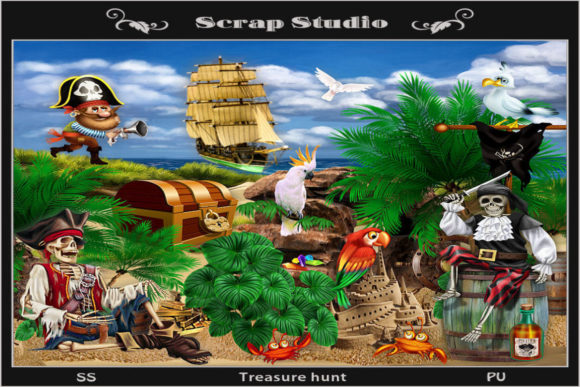
Unlocking Creativity: The Treasure Hunt Method
Imagine standing before a blank canvas, a new marketing campaign, or a complex curriculum design, feeling the familiar weight of starting from zero. Now, imagine flipping that script entirely. Instead of generating ideas out of thin air, you embark on a curated expedition to find them. This is the essence of the Treasure Hunt approach, specifically when utilizing resources like the "Items 50 Papers 5" collection. It is not merely a game; it is a structured methodology for discovery that transforms how professionals across industries source inspiration, validate concepts, and execute projects with greater depth.
At its core, a creative treasure hunt shifts the mindset from creation to curation. In a world saturated with content, the ability to sift through noise and identify high-value assets is a superpower. Whether you are a graphic designer seeking texture, an educator looking for engaging historical artifacts, or a small business owner crafting a brand story, the process remains the same: define your objective, gather your tools, and begin the search. The "Items 50 Papers 5" concept serves as a perfect microcosm of this strategy. It suggests a limited but potent set of resources—fifty distinct items or papers—that force you to work within constraints while exploring maximum variety.
The Power of Curated Constraints
Why limit yourself to fifty items? In creative professions, unlimited options often lead to paralysis. When a marketer has access to every stock photo ever taken, decision-making slows. When a writer faces a blank page with no prompts, procrastination sets in. The treasure hunt model introduces productive constraints. By defining a specific scope, such as reviewing exactly fifty papers or analyzing five specific categories of items, you create a manageable framework for exploration.
This approach encourages deep diving rather than shallow skimming. Instead of browsing thousands of mediocre ideas, you focus intensely on a select few, extracting every ounce of value from them. For a freelancer, this might mean selecting fifty past project files to audit for reusable components. For a publisher, it could involve reviewing five distinct manuscript drafts to identify recurring themes. The limitation becomes the catalyst for innovation, forcing you to look at familiar materials with fresh eyes.
Adapting the Hunt for Different Professions
The versatility of the treasure hunt lies in its adaptability. Different sectors can interpret the "items" and "papers" in ways that directly serve their unique goals.
- Designers and Artists: Your treasure hunt might involve collecting fifty physical textures, color palettes, or typography samples. The "papers" could be sketchbooks or mood boards. The goal is to build a tangible library of inspiration that breaks digital monotony.
- Marketers and Content Creators: Here, the items are data points, customer testimonials, or competitor case studies. Hunting through fifty specific analytics reports or five key industry whitepapers can reveal gaps in the market that generic brainstorming misses.
- Educators and Trainers: The hunt focuses on pedagogical tools. You might gather fifty primary source documents or five different lesson plan formats. This ensures that learning materials are diverse, evidence-based, and engaging for students.
- Entrepreneurs: Your items are potential partnerships, niche markets, or product features. Systematically evaluating fifty leads or five business models helps in making grounded, strategic decisions rather than impulsive leaps.
Executing the Search: A Practical Framework
To make this method effective, you need a systematic approach. A disorganized search yields disorganized results. Start by clearly defining what constitutes a "treasure" in your specific context. Is it a visual element that evokes a specific emotion? Is it a statistical trend that validates a hypothesis? Once defined, set your boundaries. If you are using the "Items 50 Papers 5" structure, commit to finding exactly fifty relevant pieces of information or objects, categorized into five distinct groups.
Documentation is critical during this phase. Do not rely on memory. Use digital folders, physical bins, or annotation tools to tag and sort your findings as you go. This creates an immediate archive of value that can be referenced later. As you collect, ask yourself: How does this item solve a problem? How does it connect to my broader goal? This active interrogation turns passive collecting into active strategy.
Maintaining Clarity and Consistency
A common pitfall in any research or creative project is losing the thread of the original intent. To keep your treasure hunt results clear and audience-friendly, establish a consistent naming convention or tagging system early on. If you are a blogger gathering fifty article ideas, tag them by topic, tone, and target demographic. If you are a developer hunting for code snippets, categorize them by function and complexity.
Consistency also applies to the quality of your finds. Set a standard for what makes the cut. If an item does not meet your criteria for relevance or quality, discard it immediately. This discipline ensures that your final collection of fifty items is robust and reliable. It prevents the dilution of your project with filler content that adds bulk but no value.
From Collection to Creation
The ultimate goal of the treasure hunt is not just to accumulate items, but to synthesize them into something new. Once you have your fifty items and five categories, the real work begins. Look for patterns. Do certain colors appear frequently in your design hunt? Do specific pain points emerge in your customer feedback analysis? These patterns are the seeds of your next big idea.
Consider mixing and matching elements from different categories. A marketer might combine a visual style found in category one with a messaging tone from category three to create a unique campaign voice. An educator might blend a historical document from one paper with a modern interactive tool from another to create a dynamic lesson. This cross-pollination is where true originality lives.
Furthermore, sharing your findings can amplify their impact. Create a resource hub for your team, publish a curated list for your audience, or use your collection as a portfolio piece demonstrating your research depth. When you present your treasures, explain the why behind your selection. This narrative adds layers of meaning and showcases your expertise, aligning perfectly with E-E-A-T principles by demonstrating experience and authority in your field.
Keeping the Momentum Alive
Creativity is not a one-time event; it is a habit. Make the treasure hunt a recurring part of your workflow. Schedule monthly hunts to refresh your asset libraries. Rotate your criteria to explore new angles. Perhaps one month you hunt for minimalist designs, and the next for maximalist expressions. This continuous cycle of discovery keeps your skills sharp and your perspective broad.
Remember, the value of the Treasure Hunt is not just in the items you find, but in the sharpened observational skills you develop along the way. By training yourself to see value in the details, to organize chaos into structure, and to synthesize disparate elements into cohesive wholes, you become a more effective professional. Whether you are working with "Items 50 Papers 5" or any other framework, the principle remains: the best ideas are often hidden in plain sight, waiting for someone diligent enough to find them.
In conclusion, adopting a treasure hunt mentality offers a grounded, practical path through the fog of creative uncertainty. It replaces the anxiety of the blank page with the excitement of the search. By setting clear constraints, documenting rigorously, and synthesizing thoughtfully, you turn the act of looking into the act of creating. So, define your map, gather your team, and start digging. Your next breakthrough is likely buried in the details you haven't looked at yet.